















Fuel Prices, Economic Warning for GB

By Naveed Ullah Baig
The recent surge in petroleum prices in Pakistan is not simply another economic adjustment. It is a warning signal, especially for remote and mountainous regions like Gilgit-Baltistan, where rising fuel costs quickly translate into higher prices for almost every essential commodity.
Earlier this month, the Government of Pakistan announced a sharp increase of PKR 55 per litre in petrol prices, pushing the national petrol rate to around PKR 321 per litre, while high-speed diesel climbed to nearly PKR 336 per litre. The government attributed this increase to rising international oil prices triggered by geopolitical tensions and instability in global energy markets.
Pakistan imports the majority of its petroleum products, meaning domestic fuel prices are directly affected by fluctuations in the global oil market. In recent weeks, international crude oil prices have crossed 100 dollars per barrel, with some market spikes approaching 115 to 119 dollars per barrel due to concerns about disruptions in Middle Eastern supply routes.
However, global oil prices alone do not explain the full picture of rising fuel costs in Pakistan.
The Tax Component Behind Fuel Prices
A significant portion of the petrol price paid by consumers consists of government taxes and levies. The federal government collects revenue through mechanisms such as the petroleum development levy, customs duties, oil marketing margins, and dealer commissions.
Recent estimates indicate that more than PKR 100 per litre of petrol price consists of taxes and levies imposed by the government.
This structure exists largely because Pakistan continues to struggle with a narrow tax base. The country’s tax-to-GDP ratio remains around 11 to 12 percent, significantly lower than many comparable developing economies.
The Federal Board of Revenue, the country’s main tax collection authority, has long faced difficulties expanding the tax net and bringing more individuals and businesses into formal taxation. A large portion of the economy remains undocumented, and millions of potential taxpayers remain outside the system.
As a result, governments frequently rely on indirect taxes such as fuel levies to generate revenue. In practical terms, when the state cannot collect enough direct taxes from income and corporate sectors, it turns to consumption-based taxation. Petrol and diesel become one of the most effective channels to collect revenue from the wider population.
IMF Conditions and Fiscal Policy
Pakistan’s fuel pricing policy is also shaped by its economic agreements with the International Monetary Fund.
Under ongoing IMF-supported reforms aimed at stabilizing Pakistan’s fiscal system, the government has committed to reducing energy subsidies and allowing fuel prices to reflect actual market costs. These reforms are designed to reduce budget deficits and improve fiscal discipline.
However, the result is that the government has limited room to shield consumers when international oil prices rise. When global prices increase, domestic prices inevitably follow.
While these reforms may be necessary to stabilize Pakistan’s economy, they also transfer a greater share of the global energy price shock directly to consumers.
Why Gilgit-Baltistan Feels the Impact More
For residents of major cities like Karachi or Lahore, rising fuel prices mainly affect transportation costs. In Gilgit-Baltistan, the impact is far broader.
The region relies heavily on goods transported from Rawalpindi and other cities in Punjab. Essential commodities such as flour, vegetables, medicine, construction materials, and fuel itself travel hundreds of kilometres before reaching markets in Gilgit, Skardu, Hunza, and other districts.
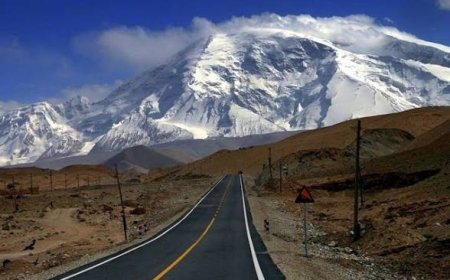
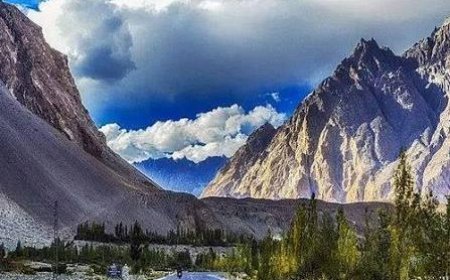
The backbone of this supply chain is the Karakoram Highway, which connects Gilgit-Baltistan with the rest of Pakistan.
Every truck travelling this route depends on diesel.
When diesel prices increase, transportation costs rise immediately. Transport companies then pass these costs to wholesalers, wholesalers pass them to retailers, and ultimately the burden falls on ordinary consumers.
This chain reaction means that fuel price increases quickly translate into inflation in local markets. Food prices rise, construction costs increase, and the price of everyday goods climbs steadily.
For a region already facing high logistics costs and limited industrial production, the impact can be particularly severe.
Changing Consumption Patterns
Another important factor within Gilgit-Baltistan is the rapid growth in private vehicle ownership over the past decade.
Imported NCP vehicles, Japanese SUVs, and large-engine vehicles such as Prados and Land Cruisers have become increasingly common across the region. In many towns, vehicles are often used even for short distances where walking or shared transportation could easily be an alternative.
When fuel prices were relatively lower, this trend did not appear economically significant. However, if international oil prices continue to rise and domestic petrol prices move toward PKR 400 or even higher, operating large vehicles may become financially difficult for many households.
What was once a convenience could soon become an economic burden.
A Moment for Awareness
The purpose of highlighting these realities is not to create alarm but to encourage awareness and preparedness.
Gilgit-Baltistan’s economy is particularly sensitive to fuel prices because almost every supply chain depends on transportation from outside the region. Even small increases in diesel costs can produce large ripple effects across local markets.
Encouraging shared transportation, reducing unnecessary vehicle usage, and strengthening local agriculture and small-scale production could help reduce dependence on imported goods.
These steps may not eliminate the impact of rising fuel prices, but they can help communities reduce economic vulnerability.
A Policy Warning for Gilgit-Baltistan
For policymakers in Gilgit-Baltistan, the rising cost of fuel should be viewed as an early warning rather than a temporary inconvenience. The region’s heavy dependence on imported goods and long-distance transportation makes its economy extremely sensitive to energy price shocks. If fuel prices continue to rise, the pressure will not only be felt in household budgets but also in food security, construction costs, and public transportation. This is the moment for the Gilgit-Baltistan government to begin serious planning. Policies that encourage efficient public transport, regulate the growing number of fuel-intensive vehicles, and support local agriculture and small-scale production could reduce the region’s vulnerability to external economic shocks. Without proactive planning, rising fuel prices will continue to translate into rising living costs for ordinary citizens. The challenge ahead is not only economic, it is about building resilience in a region where every increase in fuel prices travels directly into the daily lives of the people.
What's Your Reaction?
 Like
4
Like
4
 Dislike
0
Dislike
0
 Love
0
Love
0
 Funny
0
Funny
0
 Angry
0
Angry
0
 Sad
0
Sad
0
 Wow
0
Wow
0