














Khunjerab Tourism Corridor – A Game Changer for Pakistan’s Economy
Pakistan stands at a critical economic crossroads, where bold, innovative, and timely decisions are required to unlock new avenues of growth. Among the most promising opportunities is the development of the Khunjerab Tourism Corridor, a transformative initiative that has the potential to redefine Pakistan’s tourism landscape and inject billions into the national economy.
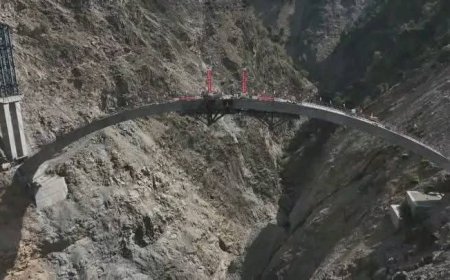
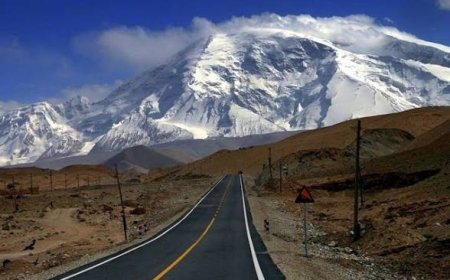
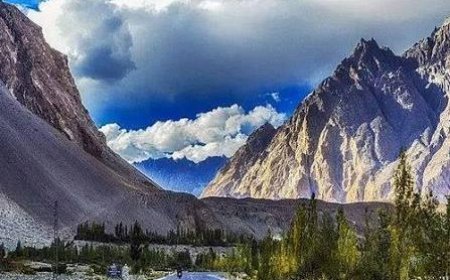
Blessed by nature, Pakistan is home to the majestic Karakoram Range, widely regarded as one of the most breathtaking mountain systems on Earth. At its crown lies the iconic Khunjerab Pass, the highest paved international border crossing in the world, connecting Pakistan with China—the second-largest economy globally. This unique geographical advantage places Pakistan in a strategic position to capitalize on cross-border tourism.
A Timely Proposal Amid Crisis
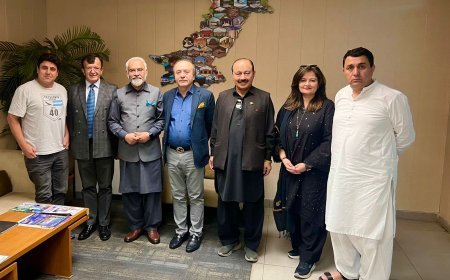
Recently, a formal letter was submitted to the Prime Minister of Pakistan on behalf of key stakeholders—including the Pakistan Association of Tour Operators (PATO), hotel associations, and chambers of commerce—urging immediate implementation of special visa facilitation for Chinese tourists.
This request comes at a crucial time. The ongoing Middle East conflicts have severely impacted global travel patterns, particularly affecting tourism in northern Pakistan. Gilgit-Baltistan, where nearly 90% of the local population depends directly or indirectly on tourism, is now facing the risk of a deep economic downturn.
Without immediate intervention, the region could encounter a serious economic crisis. The Government of Pakistan must act swiftly to protect livelihoods and sustain economic stability in this vital region.
Why Chinese Tourism Matters
Global tourism data highlights a compelling reality: Chinese tourists are the world’s highest spenders. In 2025 alone, they accounted for approximately 25% of global tourism expenditure. A single Chinese tourist in Europe spends thousands of euros per trip, with nearly half allocated to shopping.
Pakistan, as China’s immediate neighbor and a key partner in the China-Pakistan Economic Corridor, is uniquely positioned to capture a share of this massive market. With millions of tourists traveling annually from China—particularly from Xinjiang—Pakistan can unlock unprecedented economic potential through smart policy reforms.
Khunjerab Tourism Corridor: Vision and Opportunity
The Khunjerab Tourism Corridor envisions transforming the Pak-China border into a vibrant hub of tourism, trade, and cultural exchange. Key components include:
Establishment of a Karakoram Tourism Park at Sost
Development of a modern heritage shopping complex showcasing Pakistani handicrafts
Introduction of visa-on-arrival or visa-free entry for Chinese tourists
Launch of free shuttle services between Sost and Tashkurgan
Creation of a Foreign Tourist Facilitation & Helpline Center
Incentives such as discounted hotels, transport, and shopping rebates
This initiative is not merely about tourism—it is about economic transformation. With Chinese outbound tourism spending exceeding $350 billion annually, even a small share can significantly strengthen Pakistan’s foreign exchange reserves.
Pilot Project in Hunza-Nagar
To ensure practical implementation, it is proposed that this initiative be launched as a pilot project in Hunza-Nagar Valley—a region already renowned for its natural beauty, cultural heritage, and tourist appeal. Upon success, the model can be expanded to other destinations across Gilgit-Baltistan, including Skardu and beyond.
Balancing Growth with Sustainability
While promoting tourism, it is equally important to adopt eco-tourism principles. Controlled and well-managed tourism can protect fragile mountain ecosystems while maximizing economic benefits. This initiative provides an opportunity to shift from unregulated mass tourism to a sustainable, high-value tourism model.
Security and Infrastructure: A Key Priority
Tourism cannot thrive without safety. Establishing a specialized Tourist Police force, equipped with modern surveillance systems and trained in Chinese language, is essential. Drawing inspiration from successful models in countries like Malaysia, Pakistan can enhance its global image as a safe and welcoming destination.
A Personal Perspective
With over 25 years of experience in the tourism industry, academic training in the United States, and participation in international tourism exhibitions across more than 30 countries, I have witnessed firsthand how strategic planning and policy reforms can transform nations into global tourism hubs.
Pakistan has all the ingredients—natural beauty, cultural richness, and strategic location. What is needed now is decisive action.
A Call to Action
Pakistan’s leadership, including the Prime Minister and national institutions, has already demonstrated a strong commitment to promoting tourism. The recent growth in tourism numbers reflects this dedication. However, the time has come to take the next bold step.
The Khunjerab Tourism Corridor is not just an idea—it is a necessity.
Failure to act would mean missing a historic opportunity. Success, on the other hand, could reduce economic dependency, uplift local communities, and position Pakistan as a leading tourism destination in the region.
As neighbors to a global economic powerhouse like China, we must ask ourselves: if we cannot benefit from this proximity, where does the problem lie?
The answer is clear—and so is the solution.
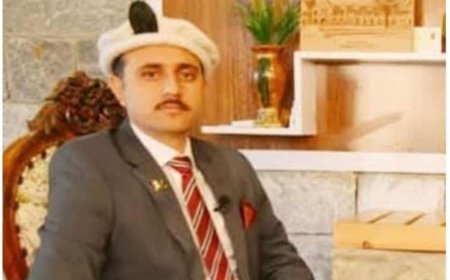
By Nazim Ullah Baig
Managing Director, Discovery Pakistan
Tourism Expert & Industry Stakeholder
What's Your Reaction?
 Like
2
Like
2
 Dislike
0
Dislike
0
 Love
2
Love
2
 Funny
0
Funny
0
 Angry
0
Angry
0
 Sad
0
Sad
0
 Wow
1
Wow
1