

















The Stones That Remember GB History
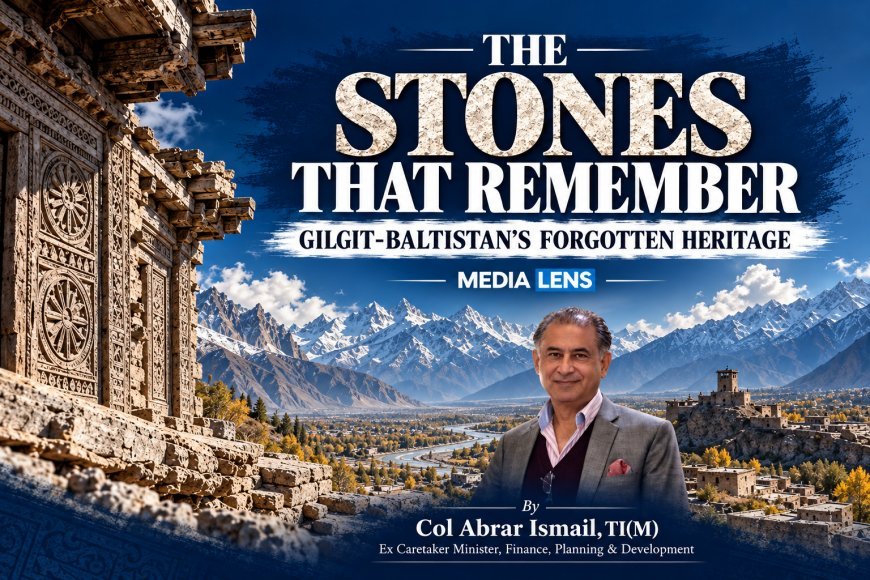
By Col Abrar Ismail, TI(M)
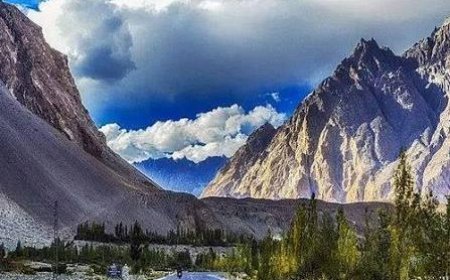
Thousands of years of human history are etched into the rocks of Gilgit Baltistan. Buddhist stupas, ancient inscriptions, and the traces of travellers along the old Silk Routes tell a story of cultural exchange that connected South Asia with Central Asia and China.
Yet this irreplaceable heritage remains vulnerable to neglect, vandalism, and development projects.
Our mountains are not merely a natural wonder. They are an open-air archive of human civilisation.
"Let us protect our past before it disappears forever"
The silent stones of Gilgit Baltistan speak of ancient civilisations, the spread of Buddhism, and the intellectual journeys that once connected South Asia with Central Asia and China. Yet much of this priceless heritage remains vulnerable to neglect, development pressures, and the passage of time.
Gilgit Baltistan and the adjoining mountainous regions of northern Pakistan are among the most remarkable repositories of ancient cultural heritage in the High Mountain Asia region. Scattered across dramatic valleys, ancient trade routes, and rocky riverbanks, thousands of rock carvings and inscriptions bear witness to centuries of human movement, religious exchange, artistic expression, and intellectual endeavour.
From Chilas, Thalpan and Shatial along the Indus to sites across Gilgit, all the way upto soost , and the wider region, these engravings are far more than images etched into stone. They are historical documents written by travellers, merchants, pilgrims, monks, and local communities who once inhabited or crossed these mountains. They preserve fragments of a past that connected the Indian subcontinent with Central Asia, Tibet, and China.
"A civilisation written in stone"
The rock art of northern Pakistan represents an extraordinary archaeological record. It includes images of stupas, Buddhas, bodhisattvas, hunting scenes, animals, human figures, and symbols associated with different religious and cultural traditions. Inscriptions in ancient scripts, including Kharosthi, Brahmi, Sogdian, and Tibetan, further demonstrate the linguistic and cultural diversity of the region across different periods.
The archaeological landscape along the Indus, particularly around Shatial, Chilas and Thalpan, is closely associated with the ancient routes that linked the subcontinent with the Tarim Basin and other parts of Central Asia. Travellers left inscriptions and images on rocks beside routes that were used for trade, pilgrimage, and communication.
These carvings reveal that the mountains were not barriers isolating communities from the wider world. They were corridors of exchange through which ideas, artistic traditions, languages, and religious beliefs travelled across continents.
"Buddhism and the ancient Silk Road"
Between the early centuries BCE and the medieval period, Buddhism spread through a vast network of routes connecting the Indian subcontinent with Central Asia, the Himalayan region, and China. Gilgit Baltistan occupied a strategically important position within this wider cultural landscape.
The Buddhist carvings of the region reflect the movement of religious ideas and the presence of communities familiar with Buddhist symbols, sacred architecture, and artistic conventions. Images of stupas, in particular, provide important evidence of Buddhist devotional practices and the transmission of religious culture.
The wider region also preserves a significant manuscript heritage. The famous Gilgit manuscripts, discovered in the twentieth century, include Buddhist texts that are among the most important surviving witnesses to the history of Buddhist literature and manuscript culture in South Asia. Their significance extends well beyond the boundaries of modern Gilgit Baltistan.
The Chinese Buddhist pilgrim Xuanzang, who travelled through parts of Central and South Asia in the seventh century, recorded information about Buddhist centres and political territories in the wider region. His accounts, alongside archaeological evidence and other historical records, help scholars reconstruct the complex geography of Buddhism across Asia.
However, individual sites and routes must be identified carefully; not every ancient rock carving can be directly linked to a particular traveller or historical account.
"An archaeological treasure of international importance"
The importance of Gilgit Baltistan's rock art is not limited to Buddhism alone. The wider archaeological record reflects successive layers of cultural history, including pre Buddhist traditions, Buddhist religious expression, and later historical periods.
The engravings offer researchers valuable evidence about ancient scripts, artistic styles, religious beliefs, clothing, weapons, animals, trade networks, and the movement of people through the mountains. Their study helps explain how remote valleys participated in broader historical developments across Asia.
The region's archaeological significance has attracted international scholarly attention, including research by specialists associated with the study of the Karakoram and the ancient routes of northern Pakistan. The German Pakistani archaeological project associated with the names of Karl Jettmar and Harald Hauptmann made particularly important contributions to the systematic documentation and study of the region's rock art and inscriptions.
This body of evidence deserves continued research, careful documentation, and recognition as a shared cultural inheritance of Pakistan and the wider world.
"Development must not erase history"
One of the greatest challenges facing this heritage is the tension between infrastructure development and archaeological preservation.
The construction of the Karakoram Highway transformed connectivity across northern Pakistan, but road building and associated works also placed archaeological sites under pressure. At some locations, damage, disturbance, and loss of rock art have been reported over time. The exact number of carvings lost should be established through documented archaeological surveys rather than repeated without verification.
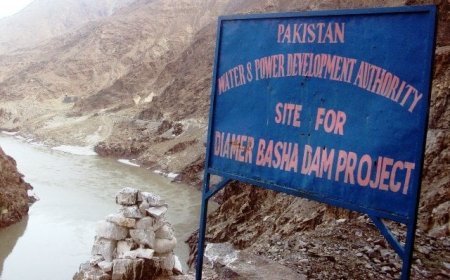
Today, expanding infrastructure, quarrying, environmental degradation, vandalism, and proposed water and hydropower projects raise further concerns. Where reservoirs or other major works may affect archaeological landscapes, comprehensive surveys and heritage impact assessments must be undertaken before construction begins.
Once an inscription or carving has been destroyed, its original context cannot truly be restored. A photograph may preserve its appearance, but it cannot fully preserve the relationship between the carving, the landscape, the ancient route, and the people who left it behind.
Development is essential for the prosperity of local communities. But development that permanently destroys irreplaceable historical evidence comes at a cost that future generations cannot reverse.
"A call for action"
The protection of Gilgit Baltistan's archaeological heritage must become a shared responsibility of government institutions, archaeologists, universities, local communities, civil society, and development agencies.
A practical programme should include:-
- A comprehensive digital inventory; Document rock carvings and inscriptions through high resolution photography, GPS mapping, and three dimensional scanning.
- Heritage impact assessments; Require archaeological surveys before road construction, dams, reservoirs, mining, and other major infrastructure projects.
- Legal protection and monitoring; Identify vulnerable sites, strengthen enforcement against vandalism, and establish regular inspections.
- Research and international cooperation; Encourage partnerships between Pakistani universities, museums, archaeological departments, and international research institutions.
- Community participation; Train and involve local residents as heritage custodians, guides, and researchers, creating opportunities for sustainable cultural tourism.
- Public awareness and education; Introduce local heritage into school programmes and develop responsible visitor facilities at suitable archaeological sites.
Where preservation in place is possible, it should be the priority. Where a credible threat cannot be avoided, documentation, conservation planning, and expert led mitigation must take place before any irreversible intervention.
"The stones must not be allowed to fall silent"
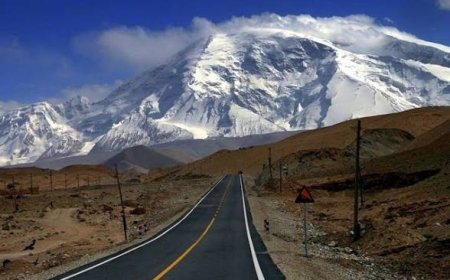
Gilgit Baltistan is celebrated for its majestic mountains, glaciers, rivers, and extraordinary natural beauty. Yet its cultural landscape is equally remarkable. Beneath the shadows of the Karakoram and along the banks of the Indus lies a record of humanity's shared past one that links Pakistan to the wider history of Asia.
These carvings are not merely relics of a forgotten religion or remnants of a distant civilisation. They are evidence of human creativity, spiritual exploration, and the enduring desire to communicate across generations.
Their preservation is not a rejection of progress. It is a declaration that progress must respect memory, identity, and knowledge.
If we allow these inscriptions to disappear through neglect or poorly planned development, we will lose more than ancient artwork. We will lose irreplaceable chapters of our own history and a valuable part of humanity's collective memory.
The stones of Gilgit Baltistan have preserved their testimony for centuries. It is now our responsibility to ensure that future generations can still hear their voice.
#GilgitBaltistan #BuddhistHeritage #RockArt #AncientSilkRoad #Archaeology #CulturalHeritage #ProtectOurHistory
What's Your Reaction?
 Like
0
Like
0
 Dislike
0
Dislike
0
 Love
0
Love
0
 Funny
0
Funny
0
 Angry
0
Angry
0
 Sad
0
Sad
0
 Wow
0
Wow
0