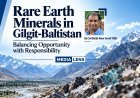





Rare Earth Minerals in Gilgit Baltistan
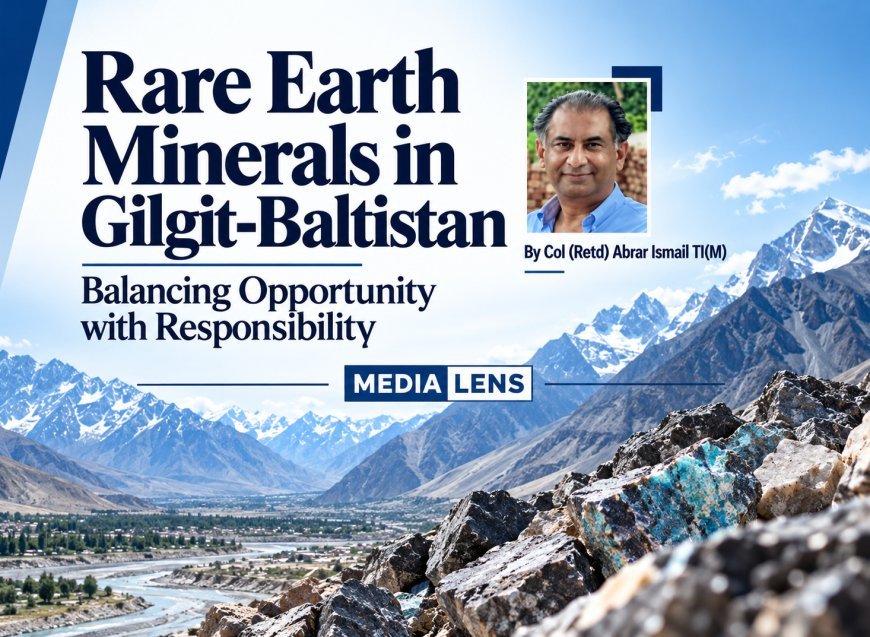
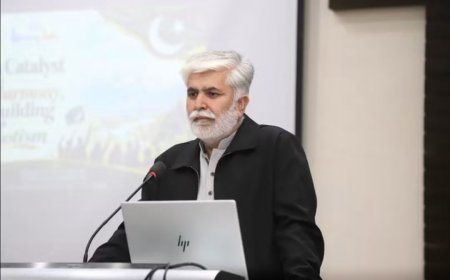
By Col (Retd) Abrar Ismail, TI(M)
Former Caretaker Minister for Finance, Planning and Development, Government of Gilgit Baltistan.
Gilgit Baltistan’s mineral wealth has the potential to support job creation, industrial development and public revenue. Rare earth elements (REEs), which are essential to electric vehicles, renewable energy technologies, electronics and certain defence applications, may offer significant economic opportunities.
However, mineral development must be guided by scientific evidence, transparency and robust environmental safeguards. The objective should be neither indiscriminate extraction nor blanket rejection, but responsible development based on proven commercial viability and manageable environmental and social risks.
Understanding the Resource
Rare earth elements are not necessarily scarce in the Earth’s crust. The challenge lies in identifying deposits from which they can be economically recovered while managing environmental risks.
Independent geological surveys, representative sampling and laboratory testing must establish the mineral composition, commercial potential and possible presence of thorium, uranium, heavy metals or other contaminants.
Identifying a mineral occurrence is not the same as establishing a commercially viable and responsibly mineable resource. Decisions must therefore be based on reliable geological data and independent technical assessments rather than speculation.
Health and Environmental Risks
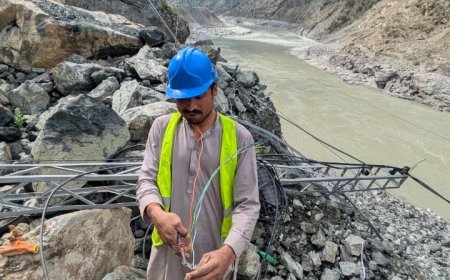
Mining and mineral processing can expose workers and surrounding communities to dust, hazardous chemicals, heavy metals and, in some deposits, radioactive materials. The nature and severity of these risks depend on the geology, extraction and processing methods, exposure levels, and effectiveness of safety measures.
Dust generated by drilling, blasting and crushing can cause serious respiratory illnesses. Acids, solvents and other processing chemicals can harm workers and contaminate the environment if they are improperly handled or disposed of. Where thorium or uranium is present, radioactive residues and radon may require additional monitoring and specialised controls.
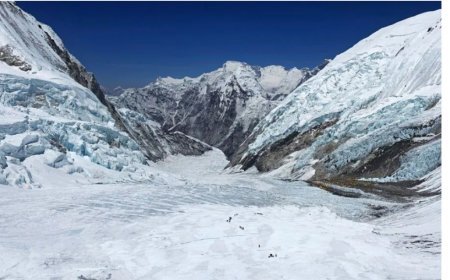
Gilgit Baltistan’s fragile mountain ecosystems, glaciers, rivers, agricultural valleys and downstream communities make environmental protection particularly important. Poorly managed mining can result in water contamination, soil degradation, erosion and habitat loss.
Waste rock and tailings storage facilities must therefore be properly designed, independently monitored and securely maintained throughout the life of a mine and after its closure. Environmental obligations must not end when commercial extraction ceases.
Economic Potential
If commercially viable deposits are confirmed, responsible mineral development could create opportunities in mining, engineering, transportation, laboratory services, mineral processing and technical education. It could also generate royalties, taxes and other public revenues.
Nevertheless, rare earth projects require substantial investment, advanced processing technologies, reliable infrastructure, skilled personnel and access to international markets. Extracting mineral bearing rock is not the same as producing high purity rare earth products, which often require complex separation and refining processes.
Independent feasibility studies should assess the entire value chain, including extraction, processing, transportation, energy requirements, environmental management and market demand. Wherever technically and economically feasible, local beneficiation and processing should be encouraged to retain greater value within Gilgit Baltistan and Pakistan.
"A Responsible Framework for Gilgit Baltistan"
Gilgit Baltistan needs a transparent, technically competent and accountable framework to ensure that mineral development serves the public interest. The following measures merit serious consideration:-
1.Establish an independent investment facilitation board. Create a professional board, modelled on the Board of Investment (BOI), comprising qualified, experienced and forward looking members under a dedicated chairperson. Its mandate should be focused on facilitating responsible mining investment, while the Mines and Minerals Department, including its secretary, should operate within a clearly defined institutional and accountability framework. Appropriate legal arrangements should prevent conflicts of interest and preserve regulatory independence.
2.Undertake independent geological surveys.
Invest in credible geological mapping, representative sampling, mineral identification and laboratory testing to establish the actual resource potential.
3.Mandate comprehensive impact assessments. Require rigorous environmental and social impact assessments before approving exploration or extraction projects, in accordance with applicable laws.
4.Establish environmental baselines.
Record pre project conditions for water, air, soil and biodiversity to enable meaningful monitoring and identify changes attributable to mining.
5.Enforce occupational health and safety. Require dust suppression, exposure monitoring, appropriate protective equipment, worker training and medical surveillance.
6.Regulate mining waste.
Require scientifically designed waste rock and tailings management systems, together with funded mine closure and rehabilitation plans.
7.Protect local livelihoods and water resources. Safeguard drinking water, agricultural land, grazing areas and the livelihoods of communities that depend on these resources.
8.Ensure community participation. Consult affected communities meaningfully and provide public access to environmental monitoring results and relevant project information.
9.Strengthen independent oversight.
Improve inspections, laboratory testing, regulatory enforcement and penalties for violations. Monitoring should be credible, impartial and supported by adequate technical capacity.
10.Secure rehabilitation guarantees. Require adequate financial guarantees to cover environmental restoration, mine closure and the rehabilitation of abandoned or inadequately managed sites.
11.Ensure transparent public benefits. Establish clear rules for royalties, taxes, local employment, skills development and community benefits. Publish relevant revenue and compliance information to strengthen public confidence.
Review inactive mining leases. Conduct a legal and technical review of leases under which no substantive work has commenced for two years or more. Where leaseholders have failed to meet contractual obligations without a valid justification, the authorities should initiate cancellation or other appropriate action in accordance with applicable law and due process.
12.Audit previously approved leases. Commission an independent audit of existing mining leases and approvals to identify irregularities, conflicts of interest, non compliance or other anomalies. Where wrongdoing is established, those responsible should face appropriate disciplinary, civil or criminal proceedings, as warranted by the evidence and applicable law.
A dedicated critical minerals policy should clearly define licensing requirements, environmental approvals, radioactive material management, revenue transparency, investor obligations and mine closure responsibilities.
Investors should be assessed on their technical competence, financial strength, environmental record, operational experience and willingness to comply with independent oversight. Investment facilitation must not come at the expense of effective regulation.
Conclusion
Rare earth minerals may offer Gilgit Baltistan valuable economic opportunities, but mineral wealth alone does not justify extraction. Projects should proceed only when they are commercially viable, technically sound, environmentally manageable and demonstrably beneficial to local communities.
The region must avoid two extremes,allowing uncontrolled exploitation in pursuit of short term revenue, and rejecting potentially beneficial investment without first establishing the facts. A balanced approach, grounded in scientific evidence, institutional accountability and environmental responsibility, can help transform mineral resources into sustainable economic opportunities.
The true measure of success is not how much mineral wealth is extracted, but how much lasting benefit is created without compromising public health, environmental integrity or the prospects of future generations.
----
The author is former Caretaker Minister for Finance, Planning and Development, Government of Gilgit Baltistan.
What's Your Reaction?
 Like
0
 Dislike
0
 Love
0
 Funny
0
 Angry
0
 Sad
0
 Wow
0