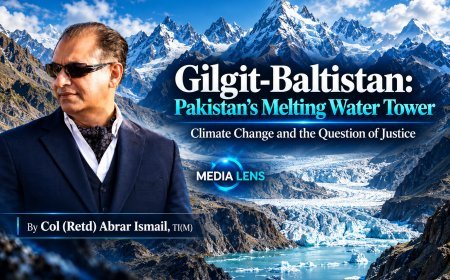











The Melting Water Tower of Pakistan
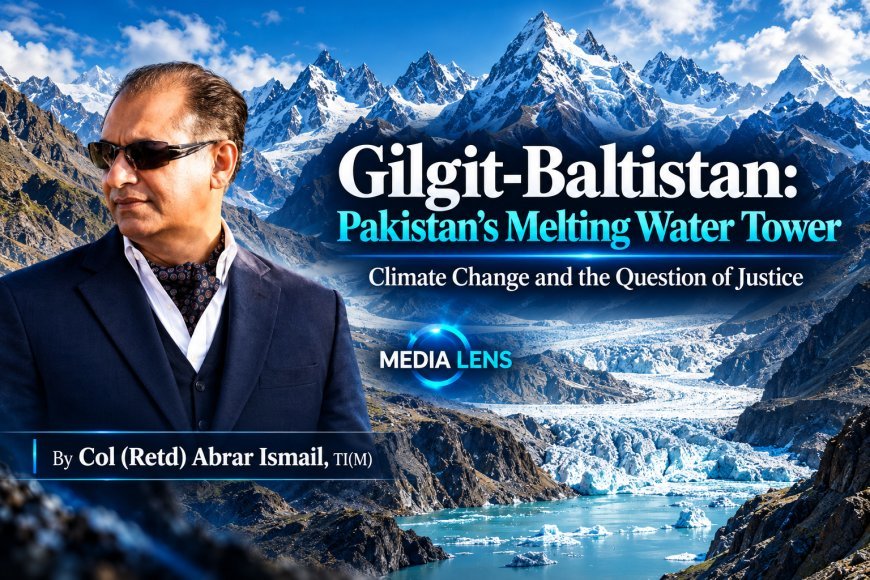
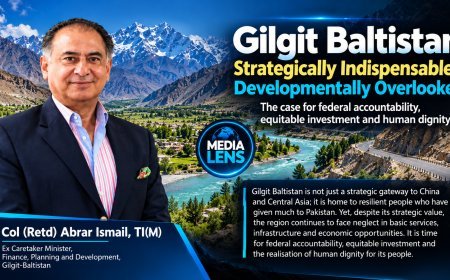
By Col (Retd) Abrar Ismail
“The rivers that nourish the plains of Pakistan begin in the mountains of Gilgit Baltistan. Yet those who live closest to the source of this national lifeline are among the people most exposed to the consequences of its changing climate.”
A visual warning from the roof of Pakistan
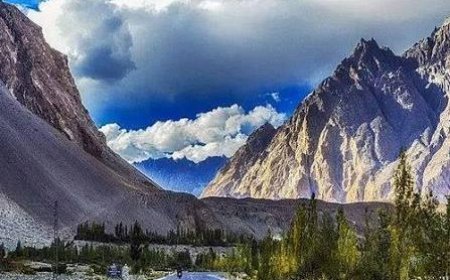
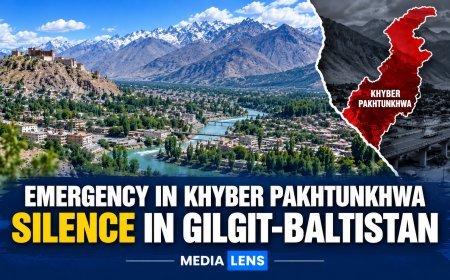
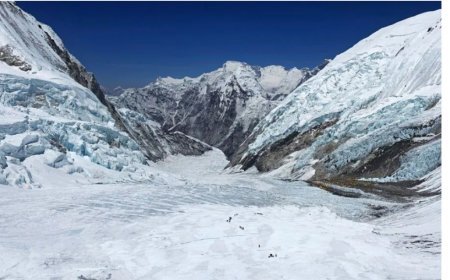
The images of glaciers and glacial rivers in this video are more than a display of the natural beauty of northern Pakistan. They are a reminder of a national reality that demands urgent attention: the future of Pakistan’s water security is inseparable from the future of its northern mountains.
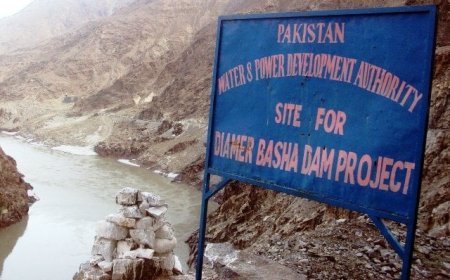
Gilgit Baltistan, situated in the heart of the Karakoram, Himalaya and Hindu Kush mountain systems, is home to an extraordinary concentration of glaciers, snowfields and river headwaters. These natural reservoirs store water in winter and release it during the warmer months, helping sustain the Indus River system on which Pakistan’s agriculture, hydropower generation and drinking water supplies depend.
The importance of this contribution extends far beyond the region’s geographical boundaries. It reaches the agricultural plains of Punjab and Sindh, where irrigation supports crops, livelihoods and the food supply of a nation of more than 240 million people.
Yet a fundamental question remains unanswered:
What meaningful and proportionate return does Gilgit-Baltistan receive for the environmental risks it bears and the national water security it helps sustain ?
This is not a demand for charity. It is a demand for climate justice, equitable development and responsible national planning.
The numbers behind Pakistan’s water lifeline
Pakistan’s dependence on its river system is measurable.
According to the Pakistan Economic Survey 2025–26, the country receives an average of approximately 138.4 million acre-feet (MAF) of water annually from its river systems. Its Indus Basin Irrigation System extends across nearly 64,000 kilometres and irrigates approximately 47 million acres, supporting national agricultural production and food security. The three major reservoirs—Tarbela, Mangla and Chashma have a combined live storage capacity of approximately 13.44 MAF. "https://www.finance.gov.pk/survey_2026.html" (https://www.finance.gov.pk/survey_2026.html)
These figures demonstrate both the scale of Pakistan’s dependence on water and the importance of managing it wisely. They also expose a critical vulnerability, a vast agricultural economy depends on a river system whose headwaters are highly sensitive to changes in temperature, snowfall, glacier mass and precipitation.
The World Bank’s research on the Upper Indus Basin has estimated that glacier melt contributes approximately 19.6 MAF, or 18 per cent, of the basin’s total flow in one model-based assessment. Other studies, using different periods, methods and geographical boundaries, have estimated a substantially higher glacier melt contribution. One scientific study published in Frontiers in Earth Science found that the Gilgit Hunza sub basin was the largest source of glacier melt discharge among the sub-basins it examined.
These figures should not be treated as interchangeable; glacier melt, seasonal snowmelt and rainfall all contribute to river flows, and their relative importance varies by location and season. Nevertheless, the evidence establishes the strategic significance of the northern mountain catchments.
Sources:-
World Bank, Indus Basin of Pakistan, Impacts of Climate Risks on Water and Agriculture; Frontiers in Earth Science (2022).
https://documents.worldbank.org/en/publication/documents-report, indus-basin-pakistan-impacts-climate-risks-water-agriculture
https://www.frontiersin.org/journals/earth-science/articles
The lesson is unmistakable, the condition of the upper Indus is not merely a local environmental matter. It is a matter of national economic security.
When the glaciers melt: a national crisis in the making
Glacier retreat is often misunderstood as a simple increase in the availability of water. In reality, the consequences are more complex and potentially far more dangerous.
1. Greater flood risks in Gilgit-Baltistan
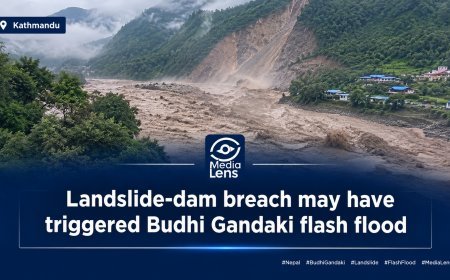
As temperatures rise, glaciers retreat and meltwater patterns change. Glacial lakes may form or expand, sometimes behind unstable natural barriers of rock and debris. If these barriers fail, a glacial lake outburst flood can send destructive volumes of water, sediment and boulders into downstream valleys.
For Gilgit Baltistan, the consequences can include the destruction of villages, agricultural land, bridges, roads, communication networks and hydropower infrastructure. Families can lose their homes, livestock and livelihoods in a matter of hours.
The Government of Gilgit Baltistan’s GLOF-II project information identifies 3,044 glacial lakes across Gilgit-Baltistan and Khyber Pakhtunkhwa combined. This is a regional risk indicator, not a figure for Gilgit-Baltistan alone, and not every lake presents the same level of danger.
Source:-
Government of Gilgit Baltistan, Forest, Wildlife and Environment Department.
https://fwegb.gov.pk/glof-ll/
The people of Gilgit Baltistan should not have to wait for a catastrophe before receiving effective early warning systems, protective infrastructure and properly funded disaster management services.
2. More water today does not guarantee water tomorrow
Accelerated melting can temporarily increase river flows in some locations and seasons. But glaciers are finite stores of frozen water. Continued ice loss, combined with changing snowfall and rainfall, can eventually reduce their capacity to sustain dependable summer flows.
This is particularly concerning for Pakistan because agricultural demand is greatest when crops need reliable irrigation.
The precise timing and magnitude of future changes remain uncertain. The scientific evidence does not support a simplistic claim that all rivers will immediately run dry when glaciers retreat. It does, however, establish the need to prepare for changing seasonal flows, greater variability and long-term risks to water availability.
The World Bank has warned that changes in glacier and snowmelt threaten water security across South Asia. Its research has also highlighted the vulnerability of the Indus, Ganges and Brahmaputra river systems to climate change.
Source:-
World Bank, Glaciers of the Himalayas: Climate Change, Black Carbon and Regional Water Security.
https://www.worldbank.org/en/news/press-release/2021/06/01/to-slow-himalayan-glacier-melt-curbing-air-pollution-is-key
3. The threat to Punjab’s and Sindh’s food production
Punjab and Sindh are the agricultural heartlands of Pakistan. Their farmers depend on reliable irrigation to cultivate wheat, rice, cotton, sugarcane, vegetables and other crops. The resulting food, fibre, employment and economic activity benefit the entire country.
The Indus Basin Irrigation System is therefore not merely a collection of canals and barrages. It is an essential part of Pakistan’s food security infrastructure.
If changing climate conditions make river flows more erratic, or if water demand continues to exceed sustainable supplies, farmers may face difficult choices. Reduced planting, lower yields, changes in cropping patterns or increased reliance on groundwater. The consequences could include rising food prices, pressure on rural incomes, greater competition over water and additional economic strain.
However, glacier retreat is only one part of this challenge. Inefficient irrigation, groundwater depletion, inadequate storage, pollution, population growth and poor water governance also threaten national water security. Effective policy must address these problems together.
The plains cannot secure their future while ignoring the mountains that help sustain their rivers.
4. Hydropower, infrastructure and the wider economy
Pakistan’s hydropower system depends on river flows. Changes in the timing and volume of water can complicate reservoir management, electricity generation and flood control.
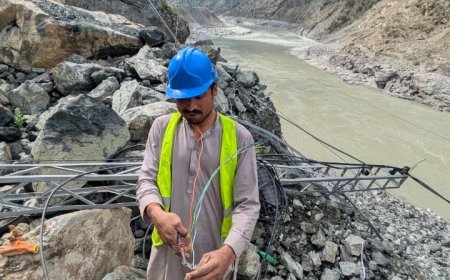
At the same time, Gilgit Baltistan’s own communities face damage to roads, transmission lines, bridges and power installations from floods, landslides and other climate-related hazards.
This creates a troubling imbalance: the region has considerable potential to contribute to national energy and water security, yet its own development remains constrained by infrastructure gaps, electricity shortages and vulnerability to natural disasters.
A fair national strategy must protect the source region while strengthening the systems that deliver benefits to the rest of Pakistan.
The injustice ; benefits travel downstream, but responsibility must travel upstream
Consider the relationship between Gilgit Baltistan and the agricultural plains.
Water originating in the northern mountain catchments helps sustain the Indus River system. Downstream, that water supports irrigation networks, agricultural production, hydropower and millions of livelihoods. The benefits are national, but many of the immediate environmental risks are concentrated in mountain communities.
Gilgit Baltistan faces glacier related hazards, fragile ecosystems, difficult terrain, expensive transport, limited infrastructure and the growing costs of climate adaptation. Its communities must protect their land and water resources while coping with the consequences of a changing climate that they did little to create.
Meanwhile, the benefits of a functioning river system are distributed throughout Pakistan, particularly across the agricultural economy of Punjab and Sindh.
The moral and policy question is simple: why should the region that helps sustain the country’s water lifeline be left to struggle for the investment needed to protect it?
It would be inaccurate to suggest that Punjab and Sindh receive no water related costs or responsibilities, or that every downstream benefit can be assigned a simple monetary value. Both provinces face serious water management challenges of their own. Nor should the relationship be framed as a dispute between the people of the mountains and the people of the plains.
The real issue is the absence of a sufficiently transparent and equitable national framework that recognises the environmental services provided by upstream regions and ensures that the costs of protecting them are fairly shared.
There should be no hostility between the people of Gilgit Baltistan, Punjab and Sindh. There should, however, be an honest national conversation about reciprocity.
If the plains are Pakistan’s food basket, the northern mountains are an essential part of the natural infrastructure that helps keep that basket supplied.
The two are interdependent. Neither can prosper sustainably at the expense of the other.
What has the federal government done and what remains necessary?
The federal government provides budgetary support to Gilgit Baltistan, and it would be inaccurate to suggest that the region receives nothing. The more important question is whether the scale, predictability and effectiveness of public investment adequately reflect its development needs, strategic importance and exposure to climate risk.
In August 2026, the Ministry of Planning reported that the federal government’s Public Sector Development Programme allocation for Gilgit Baltistan had risen from approximately Rs132.85 billion in FY2024–25 to Rs150.4 billion in FY2025–26, with a further allocation of Rs157.5 billion for FY2026–27. The government also reported an 87 per cent increase in federal budgetary support since 2022.
These are significant announced allocations, but allocations alone do not establish how much has been spent, which projects have been completed, or whether communities have received the intended benefits. Those questions require transparent project level reporting and independent evaluation.
Source:-
Ministry of Planning, Development and Special Initiatives, Government of Pakistan, 5 August 2026.
https://pc.gov.pk/web/press/get_press/1721
The federal government’s responsibility, therefore, is not simply to announce development funding. It must ensure that the region receives fair, sustained and accountable investment in proportion to its needs and national contribution.
A practical national compact for Gilgit Baltistan
The following measures should form the basis of a comprehensive agreement between the federal government, the Government of Gilgit-Baltistan and the downstream beneficiaries of the Indus Basin.
1. Establish a fair and predictable financial arrangement
Gilgit Baltistan needs a sustainable fiscal framework that does not leave essential public services and long-term development dependent on uncertain or delayed discretionary funding.
The federal government should advance a transparent, rules-based financial arrangement for the region, with predictable multi-year transfers, independent auditing and clear development indicators. The framework should reflect population, infrastructure deficits, geographical costs, poverty, climate vulnerability and the region’s contribution to national water and energy security.
The ongoing discussion about an NFC-based arrangement should lead to a workable and timely solution, taking account of the region’s distinct constitutional and administrative circumstances.
2. Create a National Mountain and Water Security Fund
Pakistan should establish a dedicated fund for glacier protection, watershed conservation, disaster preparedness and climate resilient development in Gilgit-Baltistan and other critical upper basin areas.
The fund should receive transparent federal financing and could include contributions from appropriate climate finance programmes, development partners and other lawful sources. Any contribution from downstream beneficiaries should be negotiated through a fair and accountable mechanism rather than imposed through an unsupported assumption that particular provinces owe a predetermined amount.
Funding priorities should include glacier and river monitoring, glacial lake risk reduction, early-warning systems, flood protection, slope stabilisation, resilient bridges and roads, and the restoration of degraded watersheds.
3. Build a scientific glacier-monitoring and early-warning network
Pakistan needs a coordinated, publicly accountable system to monitor glacier mass, snowfall, temperatures, glacial lakes and river flows.
The system should connect scientific institutions, the Pakistan Meteorological Department, disaster-management authorities, relevant federal agencies and the Government of Gilgit Baltistan.
High risk communities should receive timely warnings through mobile alerts, local communication networks, evacuation routes, community training and regular emergency drills. Monitoring data should be made available to researchers and the public wherever security and safety considerations permit.
4. Invest in local water storage and climate resilient infrastructure
Gilgit Baltistan should not be treated merely as a place from which water flows downstream. Its residents also need safe drinking water, dependable irrigation, electricity and resilient infrastructure.
Appropriately designed small reservoirs, rainwater harvesting, watershed restoration, efficient irrigation and carefully assessed hydropower projects can improve local livelihoods and strengthen water management.
Every major project should undergo robust environmental and social assessments, including examination of downstream impacts, community consent and benefit-sharing arrangements. Development must not destroy the very ecosystems it is intended to protect.
5. Give local communities a fair share in hydropower benefits
Gilgit Baltistan’s hydropower potential should be developed in ways that deliver tangible benefits to its people.
Projects should include transparent revenue sharing arrangements, affordable and reliable local electricity, compensation for affected communities, local employment, environmental safeguards and independent monitoring.
The region must not be expected to bear the environmental and social costs of major infrastructure while receiving inadequate benefits from the resulting economic activity.
6. Modernise the irrigation systems of Punjab and Sindh
Downstream provinces have a direct interest in protecting the sustainability of the Indus Basin.
The federal and provincial governments should jointly invest in reducing canal losses, improving watercourse efficiency, promoting suitable modern irrigation technologies, strengthening groundwater regulation and encouraging cropping patterns compatible with local water availability.
The Pakistan Economic Survey 2025–26 identifies the scale of the national irrigation network and the pressure created by increasing demand. Protecting Gilgit Baltistan’s watersheds must go hand in hand with using downstream water more efficiently.
7. Establish a fair upstream downstream partnership
The Council of Common Interests, relevant federal ministries, the Government of Gilgit Baltistan and the governments of Punjab and Sindh should develop a structured dialogue on the shared risks and benefits of the Indus Basin.
This dialogue should examine the economic value of watershed protection, climate adaptation costs, hydrological data-sharing, disaster preparedness and possible benefit sharing mechanisms.
Any financial arrangement must be based on credible evidence, clear legal authority, transparent accounting and agreement among the relevant parties.
The objective should not be to make one region pay another. It should be to recognise that protecting the river system is a shared national responsibility and that the burden must not fall disproportionately on vulnerable mountain communities.
8. Protect livelihoods and create opportunities for the younger generation
Climate adaptation cannot succeed if it ignores the people who live in the affected region.
Gilgit Baltistan requires stronger healthcare and education services, vocational training, climate resilient agriculture, sustainable tourism, support for local enterprises and improved connectivity.
Young people should have opportunities to participate in scientific monitoring, conservation, renewable energy, disaster management and responsible tourism. Local communities should be partners in environmental protection, not merely recipients of instructions from distant offices.
9. Publish an annual Gilgit Baltistan Climate and Development Report
The federal government and the Government of Gilgit Baltistan should publish an annual report detailing:-
- Federal and regional development allocations, actual expenditures and project completion rates.
- The number of high risk communities covered by functioning early warning systems.
- Progress in glacier and river monitoring.
- Climate related losses to roads, homes, farms and public infrastructure.
- Improvements in local electricity access, drinking water, healthcare and education.
- Investments in watershed protection and the economic benefits delivered to local communities.
Such reporting would allow citizens to distinguish between announcements and measurable results. It would also make it easier to assess whether national development policy is delivering fair outcomes.
Conclusion.
Water security must also mean justice for the source
The glaciers of Gilgit Baltistan are not simply frozen landscapes at the edge of Pakistan’s national consciousness. They are part of a natural system that supports the country’s agriculture, energy production and water security.
Their changing condition is a warning that Pakistan cannot separate the future of its plains from the
----
The author is former caretaker minister Finance, Planning & Development, Gilgit-Baltistan.
What's Your Reaction?
 Like
0
 Dislike
0
 Love
0
 Funny
0
 Angry
0
 Sad
0
 Wow
0